
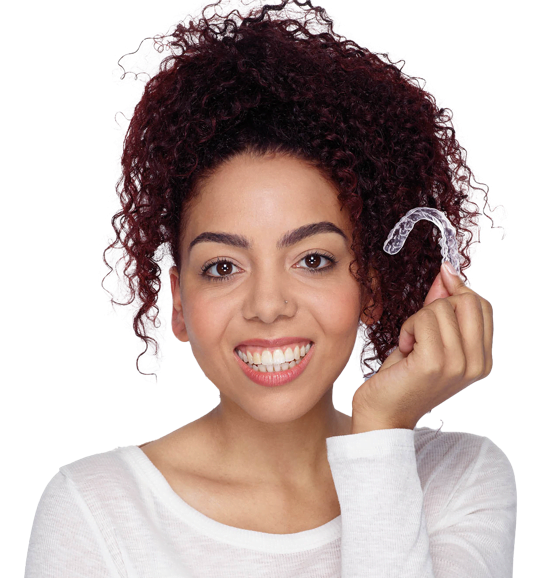


If you’re concerned about your teeth alignment, but wondering ‘what is an overbite’, we have your complete guide here with insights from a London orthodontist.
An overbite can not only affect your confidence if it’s noticeable, but it can also lead to oral health issues such as tooth wear and damage to your gums.
Perhaps this is something that runs in your family as overbites can be genetic, although they can also develop due to habits during childhood, such as prolonged thumb sucking past the age of 3.
The great thing is they can be corrected with the right treatment, as braces can move your teeth into a better position improving how your upper and lower teeth fit together.
At Sensu, we’ve treated lots of patients with an overbite, helping them enjoy a straighter, healthier smile. As a Diamond Apex Specialist Invisalign Provider and the UK’s top-ranked specialist Invisalign provider, we have transformed over 20,000 smiles, and we can help you achieve your smile goals too.
Our team is also happy to give anyone who has previously been turned down for Invisalign a second opinion, as we are confident we can find suitable treatment options for many complex cases.
What Is An Overbite?
An overbite is a type of alignment issue (or malocclusions which is latin for ‘bad bite’) which involves your upper arch of teeth overlapping (or biting over) your lower arch of teeth. Some people have a minor overbite which is less noticeable; in fact most of us have an overbite of around 2-4mm.
Therefore it’s worth remembering that not every overbite needs treatment as a small amount of overlap is completely normal.
However, if your overbite is more prominent, this can negatively impact your self-confidence as it can affect the way you appear. Aside from these aesthetic concerns, a severe over bite, also known as a deep bite, can cause problems with oral hygiene and speech if left untreated.
This can lead people to researching treatments that can help such as braces.
Symptoms of An Overbite
If you’re concerned about an overbite, it can be helpful to know the main symptoms. Whilst most of these are visual, they can also affect how comfortably you bite, speak, and chew food. It’s important to seek treatment for an overbite as it can lead to oral health problems and a loss of confidence.
Symptoms include:
- Abnormal teeth alignment
- Crooked teeth or teeth that appear to stick out
- Difficulty chewing or biting certain foods
- Pain or discomfort in your jaw
- Excessive wear on teeth
- Speech difficulties, such as a lisp
- Mouth breathing, which may occur alongside other dental or jaw alignment issues
What Problems Can An Overbite Cause?
Aside from making people feel self-conscious, a severe overbite can also cause problems with how your face and jaw appear.
This can include:
- Creating the appearance of a shorter, rounder lower face, particularly where there is a significant deep bite
- Upper teeth appearing overly long or more prominent
- Gum recession or soft tissue damage if your teeth are biting directly onto the gums
- Excessive wear or fracturing of your enamel (the hard layer that protects your teeth) if your teeth are biting against each other with excessive force
- Difficulty chewing food if your teeth don’t bite together correctly
- Difficulty pronouncing certain sounds if your overbite is significant
- A higher risk of accidental injury if your front teeth also protrude forwards, particularly if you play contact sports
What Does An Overbite Look Like?
An overbite is when your upper front teeth overlap your lower front teeth in a vertical direction when you bite together. A small amount of overlap is normal, but a more severe overbite can mean that your lower teeth are barely visible when you smile.
The severity of an overbite can vary from person to person, but in more serious cases, the upper teeth may completely cover the lower teeth.

What Is the Difference Between an Overbite and an Overjet?
It’s important not to confuse an overbite with an overjet. Whilst they both describe alignment issues, they differ in terms of the direction of the misalignment.
Starting with overjet, this refers to teeth that are being pushed outwards horizontally. This is sometimes referred to as ‘buck teeth’ as the upper front teeth protrude forwards over the lower teeth. In normal alignment, there is a gap of around 2mm between the upper front teeth and the lower teeth. However if someone has an overjet, this will be greater.
In contrast an overbite refers to the vertical misalignment of teeth. In this scenario, the upper arch of teeth are biting over, or overlapping, the lower arch of teeth. Also known as a ‘deep bite’ or ‘closed bite’, this is a relatively common condition.
Whilst both of these issues can be severe, they can often be effectively treated with braces. We should also highlight that it’s possible to have both an overbite and an overjet, but this will be assessed during your consultation.
In simple terms:
- Overbite: How much your upper front teeth overlap your lower front teeth vertically (up and down).
- Overjet: How far your upper front teeth sit in front of your lower front teeth horizontally (front to back).
Understanding the difference is important because the treatment approach may vary. For example, correcting an excessive overbite involves improving the vertical relationship between your teeth, whilst treating an increased overjet focuses on reducing the horizontal distance between them.
What Causes An Overbite?
The underlying cause of an overbite is usually having a jaw that is too small or too large. In those with a smaller jaw, this can cause teeth to grow misaligned as they are trying to squeeze into space.
In those with jaws that are too large, the opposite can occur as teeth have too much free space to roam around. This can mean that they grow in the wrong place as there is more room for gaps to develop between the teeth, affecting their overall alignment.
Most overbites are hereditary, and your parents or siblings may have a similar appearance.
Furthermore, childhood habits like thumb sucking can also contribute to an overbite as the repeated pressure can push the upper front teeth forward. Other causes can include tooth loss or prolonged use of pacifiers.
How to Correct An Overbite
If you’re concerned about your overbite, speak to an orthodontist. They will be able to assess your teeth and jaw so they can recommend the right course of treatment.
At Sensu, our team are specialists in teeth straightening and the way teeth bite together. As one of the UK’s leading providers of Invisalign, we can help those even more with complex cases. If you’ve previously been turned down for Invisalign, book your free consultation with Sensu as we’d be happy to offer you a second opinion.
Whilst overbites can be severe, they can often be corrected using a wide range of treatment options, including fixed and removable braces such as Invisalign. Below is some further information on each.
Invisalign
Invisalign is a popular way to treat overbites using a series of custom-made, clear aligners to straighten your teeth. As it’s virtually invisible, this is an appealing option for many patients as opposed to fixed metal braces.
Another benefit of Invisalign is that you can take your aligners out to eat, drink, and brush, allowing you to enjoy your normal activities with little disruption. This also means you can maintain better oral hygiene as aligners can be removed, cleaned, then popped back into place.
Explore Invisalign
Find out more about Invisalign including the benefits, process, and cost.

Clear, ceramic braces
Ceramic braces work similarly to metal braces, only they use tooth-coloured brackets which are much less noticeable. This can make them a more appealing choice for people who are self-conscious about their appearance but still want the effectiveness of fixed braces.
They work by applying gentle, consistent pressure to your teeth to gradually guide them into the right position.

Fixed, metal braces
Fixed metal braces were once believed to be the most effective way of straightening teeth using fixed brackets and metal wires.
When it comes to correcting an overbite, these can be useful as they apply controlled, consistent pressure to move teeth into the correct position. This improves how the upper and lower teeth align when you bite together.
Tooth removal
In some cases where there are too many teeth to fit comfortably, tooth extraction might be needed to free up some space. This means the remaining teeth can be moved gradually into the correct position using braces, helping to improve their alignment and correct the overbite.
This will be discussed during your consultation to work out the best course of treatment (s) based on your individual needs.
Jaw surgery
Occasionally, if your overbite is very severe, we may recommend jaw surgery. This means the upper and lower jaws can be repositioned so they align correctly which generally leads to the best outcome.
This helps improve both your bite and facial balance by correcting your profile symmetry. Surgery is typically only considered when braces cannot achieve the right results.
How Long Does It Take to Correct an Overbite?
The time needed to correct an overbite varies depending on the severity of the problem, the type of treatment used and how your teeth respond.
Some mild cases may be corrected within several months, whilst more complex cases can take 12–24 months or longer.
If you’re having Invisalign treatment, wearing your aligners for the recommended number of hours each day is particularly important, as inconsistent wear can delay progress.
Your orthodontist will provide an estimated treatment time during your consultation, although this may change depending on how your teeth respond.
Once your treatment is complete, you’ll need to wear retainers as advised to help maintain your new tooth positions and reduce the risk of your overbite returning.
Overbite FAQs
-
An overbite can cause several problems from reducing your confidence, to making it difficult to chew certain foods. It can also lead to oral hygiene issues as it can be tricky to thoroughly brush and floss certain teeth if other teeth are protruding over them.
-
Yes, overbites can worsen over time. This is down to several factors such as your enamel wearing down as you age, excessive teeth grinding (also known as bruxism), missing teeth, and failure to wear aligners. All of these things can contribute to further changes in your jaw shape, making alignment issues more pronounced.
-
An overbite in children can be caused by an inherently small jaw, early loss of baby teeth, and prolonged thumb-sucking or dummy-use past the age of 3. These factors can alter the upper and lower arches of teeth so they are out of position.
-
Yes, Invisalign can correct many deep overbites, including some more complex cases. However, the suitability of Invisalign depends on the underlying cause of the overbite and the tooth movements required. Some patients may need additional attachments or elastics, whilst others may benefit more from fixed braces or a combination of treatments. An orthodontic consultation will help determine the most appropriate option.
-
Not necessarily. A small overbite is normal, and even a more noticeable overbite may not require treatment if it’s stable and isn’t causing any problems. However, some complications, such as tooth wear or gum damage, can develop gradually without obvious pain. If you’re concerned about your bite, an orthodontic assessment can help determine whether treatment would be beneficial or whether regular monitoring is sufficient.
-
Teeth can naturally shift over time, even after successful orthodontic treatment. That’s why wearing retainers is an important part of maintaining your results. Your orthodontist will explain how often to wear your retainers and how to look after them to help keep your teeth in their new positions.
What Is An Overbite & What Is the Best Treatment?
An overbite can make you feel self-conscious, particularly if it’s significant. That said, it can be treated using Invisalign or a combination of treatments to ensure your upper and lower arches of teeth align as they should.
This not only allows you to clean your teeth more easily, but it can also improve your facial balance and symmetry by creating a better relationship between your teeth and jaws. Naturally this can boost your confidence, making you feel more comfortable when smiling or speaking in social settings.
At Sensu, we’re a Diamond Apex Invisalign provider, which means we’re recognised as one of the most experienced Invisalign providers. This gives you peace of mind that you’re in safe hands, and our team has already transformed more than 20,000 smiles. To get started on your teeth straightening journey, book your complimentary consultation (worth £350), at either our London Bridge Street or Marleybone clinic.
Book Your Free Consultation
Book a consultation, worth £350, to discuss your smile goals with our team.